
Due to unforeseen events, this event has been canceled. Hope to see you in the store soon!
Local authors Ellen Satinoff and Aron Hirt-Manheimer come together for a discussion of generational familial dysfunction and trauma, and share insights into resilience, healing, and confronting the past. A Q&A and book signing will follow the discussion.

About Aron-Hirt Manheimer
Elie Wiesel described Aron Hirt-Manheimer as “a writer possessed of a rare blend of integrity, persuasiveness, and good literary sense.” Aron co-authored Jagendorf’s Foundry: A Memoir of the Romanian Holocaust and Jews: The Essence and Character of a People, published in 10 languages. He served as editor of the largest circulated Jewish magazine, Reform Judaism from 1976 to 2014, and he founded the trailblazing West Coast quarterly, Davka, in 1970.
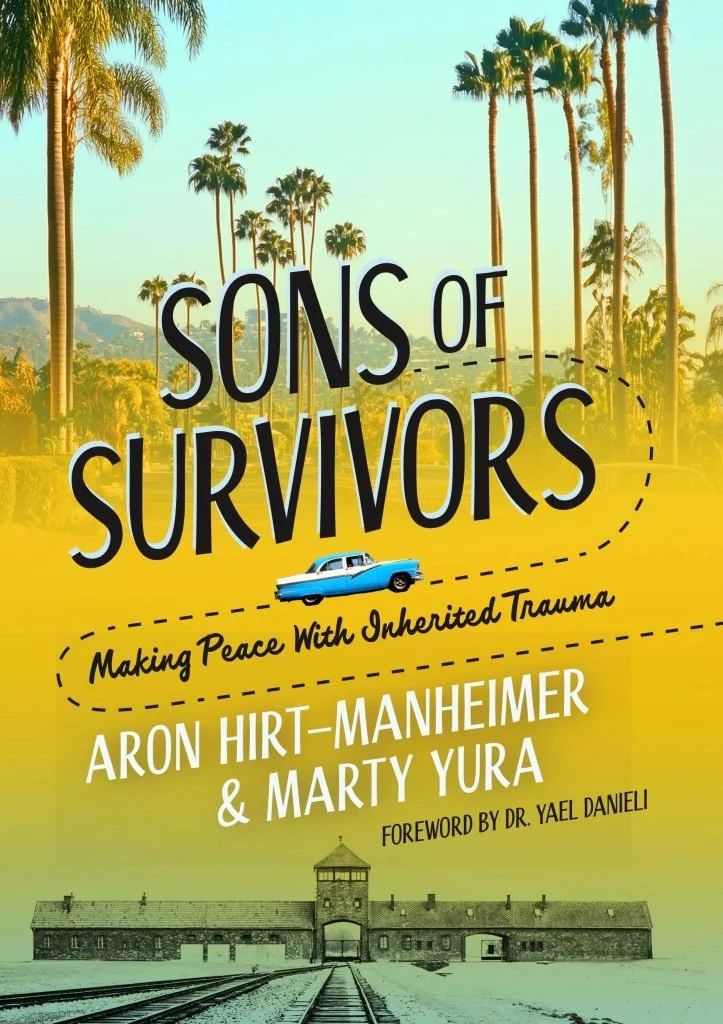
About Sons of Survivors
The authors of this dual memoir did not live through the trauma of the Holocaust; they inherited it. Whether their survivor parents revealed what they endured or erected barriers of silence, the horrors they experienced permeated the lives of their children. Aron Hirt-Manheimer and Marty Yura grew up in the close-knit community of Yiddish-speaking refugees in America. After meeting in Los Angeles as high school students, the two became fast friends with much in common, including the fact that they were both conceived in the same displaced persons camp in US-occupied Germany. This book traces their colorful growing-up adventures through fast-paced alternating passages. Though the Holocaust formed the backdrop of their lives, they didn’t talk much about it—until, as older adults, they embraced the imperative to bear witness. They set out to discover everything they could about what happened to their parents and other relatives in Poland during World War II. For Aron, the most powerful revelations were contained in a nearly forgotten memoir written by his uncle fifty years earlier in Argentina. Marty’s breakthrough came after participating in a Zen Peacemakers immersion retreat on the killing fields of Auschwitz-Birkenau. Navigating this haunted terrain together, the friends realized that the love they inherited from their parents transcends the trauma. This joint memoir attests to a legacy of love against hate.
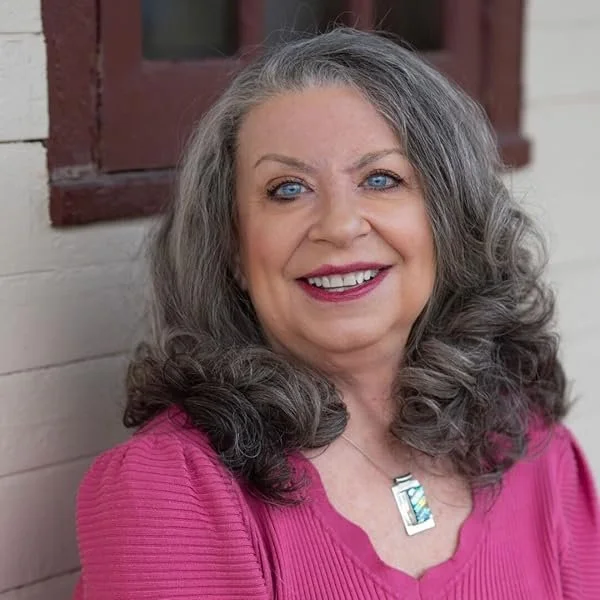
About Ellen Satinoff
Ellen Satinoff was born in Ft. Benning, GA; her parents returned to New York when she was eight months old. Although she now resides with her husband in York, PA, and despite a six-month stint in Colorado, she identifies as a native of her beloved New York. Satinoff began working when she was 14 and at the age of 43, while still working and raising her children, volunteering at both her church and her children's schools, and also hosting a foreign exchange student, she earned a Bachelor of Arts degree in English. Her memoir is the fulfillment of a lifelong dream to write a book. Post-graduation, Satinoff entered therapy to understand and resolve her depression and the bouts of anger she felt unable to control. She filled many journals, and through the writing process came to recognize the abject dysfunction and trauma of her developing years. Her memoir, "In a Mirror Dimly," recounts episodes - by turns somber and comical - from her youth. It is a story of misery and brokenness, but also of hope - how a family can be redeemed and restored. Ellen has five children, 12 grandchildren, and two great-grandchildren.
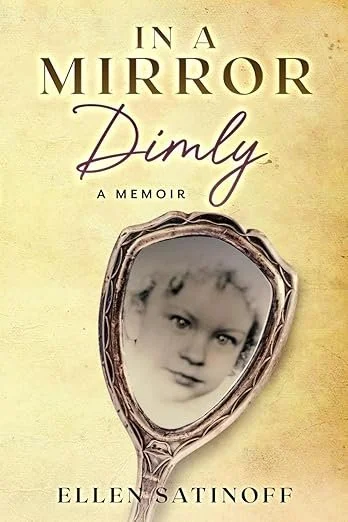
About In a Mirror Dimly
"In a Mirror Dimly" reflects the tumultuous life of a daughter born to a Catholic mother from Manhattan and a Jewish father from Brooklyn —she is a self-proclaimed “Jew-wop-y.” Familial violence is juxtaposed against political and cultural innocence, creating a childhood of uncertainty and contradiction. Mental illness and her parents’ divorce play leading roles and usher our heroine to the altar at age 17. From Greenwich Village to Queens, Long Island, and the Bronx… Colorado, California… Westchester County, her youth is shaped and overshadowed by a mother who exacted a steep price for her mental illness. Fuzzy memories of abuse and dysfunction crystalize into images that give clarity to the woman she became. Poignant—and at times comic—Satinoff recounts the experiences that created her broken inner self, and the burgeoning faith that ultimately leads her to insight, acceptance, and finally, forgiveness.